
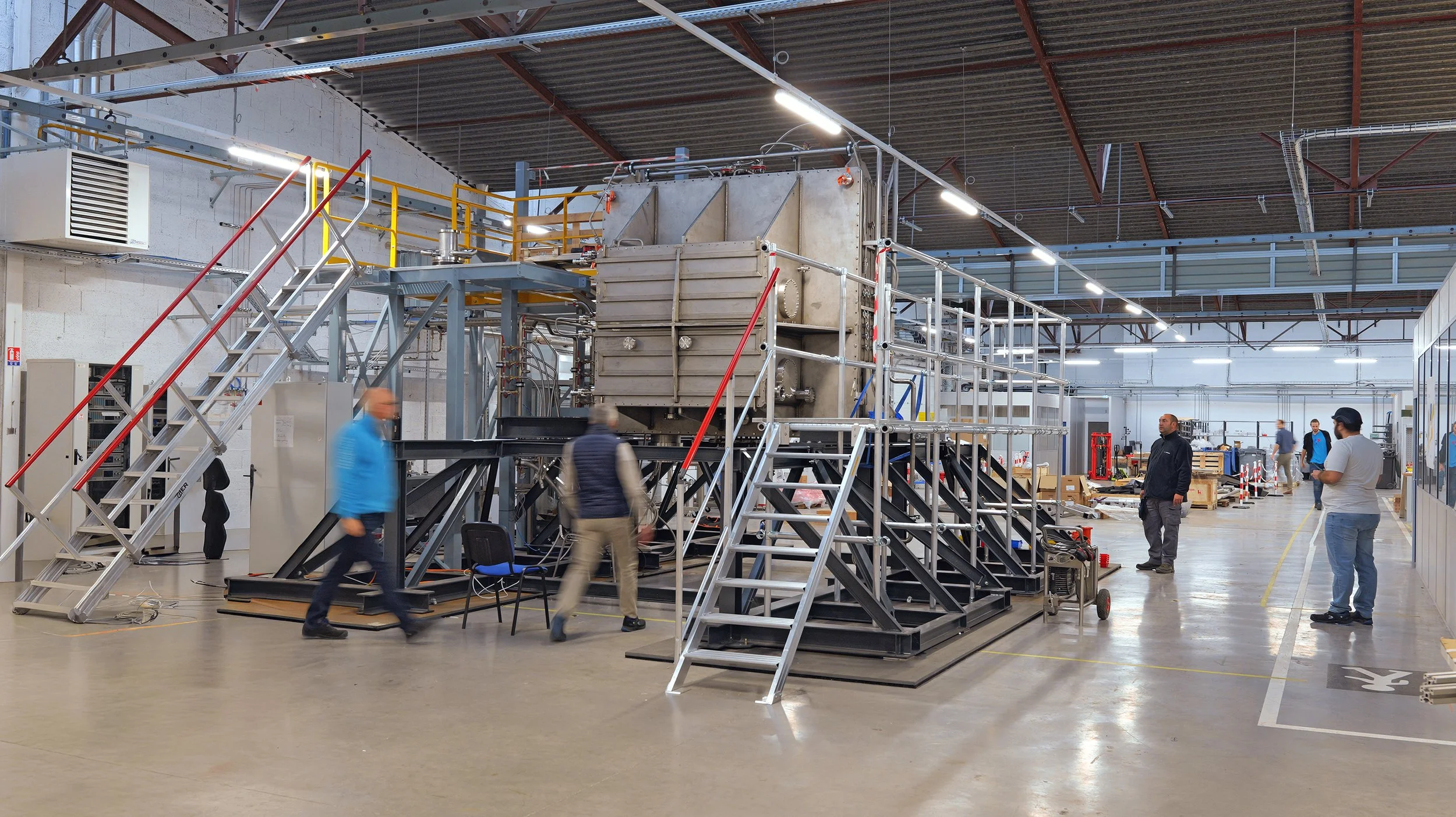
L’Abeille of RENAISSANCE
N°1 - April 2026
“L’Abeille,” pronounced [la‑bɛj], means “the bee”- a symbol of diligence and collective effort. Like a hive, the Renaissance Fusion team works to build a Sun‑inspired fusion machine- even a honeycomb cell echoes our stellarator’s shape! In this newsletter, you’ll find our perspective on the latest fusion developments and updates from us. Enjoy the read!
Don't miss the key highlights
Energy &
Fusion Frontier
A look at the forces reshaping the global energy landscape.
From emerging technologies to industrial dynamics and strategic competition.
AI pushes energy demand to new heights, fusion emerges as solution
We are entering a new phase of the energy transition — one that is no longer driven only by decarbonization targets, but by physics and demand.
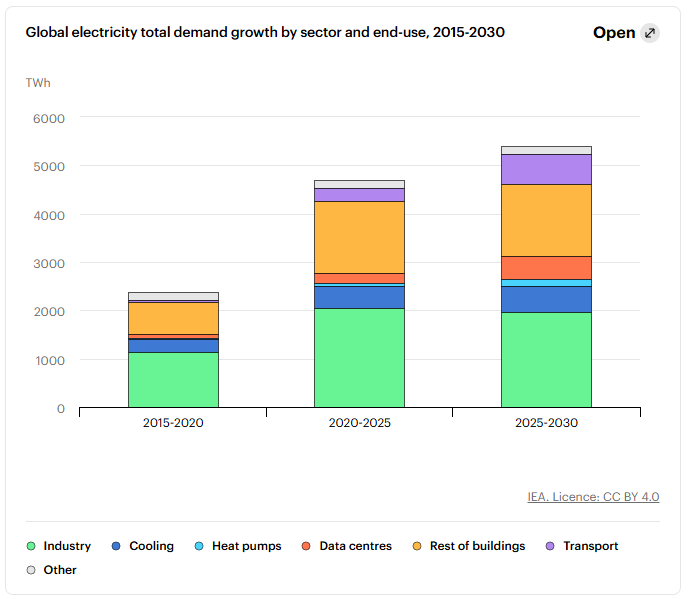
According to the IEA’s latest Electricity 2026 outlook, global electricity demand is now growing at roughly 3–4% per year, one of the fastest sustained growth rates in recent decades. In just three years, the incremental demand is projected to exceed the entire current electricity consumption of Japan.
AI, electrification of industry, and the expansion of data centers are converging into a single constraint: reliable, non-intermittent, emissions-free power at scale. AI is central to this shift. AI training clusters run at extremely high utilization rates. They are dense, geographically concentrated, and power-hungry. Hyper scalers are increasingly looking not only for renewable energy credits, but for predictable, non-intermittent supply with long-term price visibility.
This is the context in which fusion has re-entered serious strategic discussions, as a foundational technology for the age of electricity! As the World Economic Forum recently put it in Davos, fusion energy can provide the large amounts of reliable, emission-free power that advanced AI systems require. In turn, AI can accelerate the design, operation and commercialization of fusion itself. This creates a first-of-its-kind symbiotic relationship: a self-reinforcing cycle in which fusion enables AI and AI accelerates fusion’s path to scale.
These two technologies are beginning to co-evolve. The International Energy Agency also confirms this shift. In its State of Energy Innovation 2026, the agency describes fusion as a potentially transformative clean energy technology, though still at an early stage of development, and lays out clear commercialization milestones, including net energy gain, sustained operational performance, scalable fuel supply chains and strict measurement standards, underscoring that fusion is moving on its strategic agenda.
IEA identifies fusion as key technology in the race for energy innovation
IEA (International energy agency) provides a strategic overview of fusion energy in its the state of energy innovation 2026 report.
In this publication, fusion is positioned as a potentially transformative technology within the clean global energy landscape, but one that remains at an early stage of technological and commercial development.
In parallel, the IEA defines clear fusion commercialization key milestones in its races to first in energy innovation report:
Generation of more electricity than energy supplied to the plant from offsite sources and onsite sources, including from the fusion reaction itself, as well as any energy used to produce fuel inputs outside the reactor.
Operation with an average capacity factor of at least 30% over a period of 3 consecutive months.
The plant should demonstrate a fuel supply chain that could be scaled up across multiple plants. For the purposes of the calculation, generated energy output should derive exclusively from a fusion reaction.
If the energy generated is to be sold as heat and not electricity, the calculation of energy outputs is based on the heat exported from the plant.
From science projects to national strategy
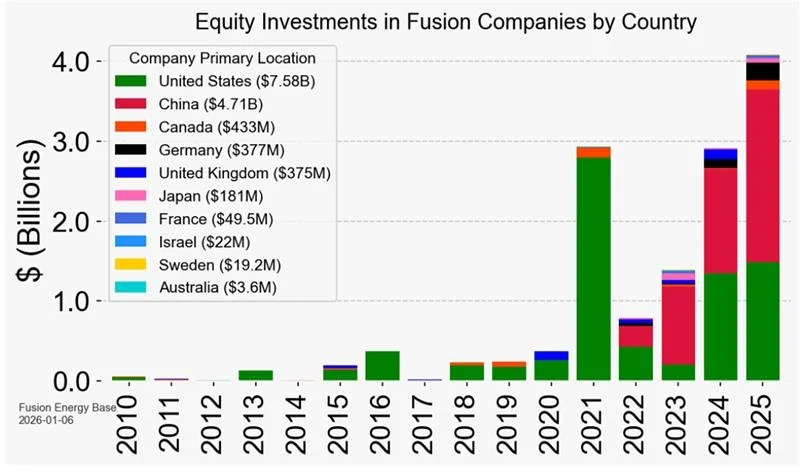
Over the past months, something important has shifted. Fusion is no longer discussed only in laboratories and academic conferences. It is increasingly framed as a matter of industrial leadership and energy sovereignty.
Across these geographies, the pattern is clear:
fusion is becoming an industrial race.
-
Germany has committed more than €2.5 billion toward fusion development before the end of the decade, announced a number of fusion test plants and started work on a regulatory framework designed specifically for fusion, intentionally simpler and faster than nuclear fission licensing.
-
The UK has also confirmed a £2.5 billion funding allocation for fusion over a five-year period. The largest share, £1.3 billion, will fund UKIFS and the STEP prototype plant at West Burton. A further £900 million supports national fusion R&D facilities, and a new lithium‑breeding and tritium‑technology site. Additional funding covers industry support (£110 million), international partnerships (£80 million), and workforce development (£50 million). Following the announcement, UKAEA confirmed progress on HTS supply chain development, the AI supercomputer, and domestic tritium‑production capabilities.
-
Across the Atlantic, the US Department of Energy has committed a new budget of $320 million to scientific programs. These efforts aim to advance understanding of high‑temperature plasmas, confinement, stability, turbulence, and plasma‑material interactions in systems such as tokamaks and stellarators. The country is also looking at fusion through a different lens: supply chains. A recent assessment by the Special Competitive Studies Project highlights a growing concern over supply chains for key materials, including isotopes like lithium‑6. Fusion is increasingly viewed not only as an energy technology but as a strategic capability tied to manufacturing and national autonomy.
-
Meanwhile, China is taking perhaps the most integrated approach, aligning research institutes, AI-driven digital twins, advanced manufacturing, and state-backed capital within a coordinated ecosystem. The objective appears less about demonstrating physics first, and more about controlling the entire industrial stack. In the country, scientific research, industrial infrastructure, and capital are being deliberately woven together. AI-driven digital twins of reactors, large-scale materials and engineering laboratories, and patient venture capital are all parts of the same system. The goal is not only to make fusion work, but to do so independently, at speed, and at scale.
-
South Korea is following a similar logic. Its national fusion plan explicitly combines public funding, industrial participation, regional demonstration facilities, and AI-enabled reactor design. Notably, South Korea is maintaining fusion technology-diversified: tokamaks, stellarators, FRC, and alternative concepts are all being pursued in parallel. This is a conscious bet on learning speed over early lock-in.
Within this race, one enabling layer repeatedly surfaces: high-temperature superconductors (HTS).
Magnetic confinement systems depend on field strength. Field strength depends on magnet performance. Magnet performance depends on superconducting materials that can withstand extreme mechanical and thermal stresses while remaining manufacturable at scale. Performance under high magnetic fields. Tape width. Yield. Cost. Mechanical stability. These are no longer academic questions; they are industrial bottlenecks.
What makes HTS particularly appealing is that it does not sit exclusively inside fusion. Recently, Microsoft Azure explored how high-temperature superconductors could transform power distribution inside next-generation data centers. As AI clusters densify, traditional copper-based architectures face spatial and thermal limitations. Superconducting systems could enable compact, high-capacity, low-loss power delivery.
In other words, HTS sits at the intersection of fusion, grid modernization and AI infrastructure, among other applications such as advanced medical imaging. The development of scalable HTS manufacturing capability influences multiple exponential sectors simultaneously. This is why parts of the fusion value chain may generate meaningful spillovers long before grid-scale fusion plants are operational.
Another shift is more subtle but equally important: fusion is beginning to meet customers. Out of more than seventy fusion startups globally, only a small subset are pursuing full-scale power plants. Among them, several have already signed power purchase agreements. These contracts do not imply near-term electricity production. But they demonstrate that sophisticated buyers are willing to plan around future fusion capacity. That changes the psychology of financing. It anchors expectations. It informs sitting discussions. It shapes supply chains. It signals that demand is not hypothetical.
The question is gradually moving from “Will there be a market?” to “Who will industrialize first?”
Where does
Renaissance Fusion stand?
A snapshot of our progress toward industrializing fusion, highlighting key technological choices, recent milestones, and how our approach is designed for scalability and execution.
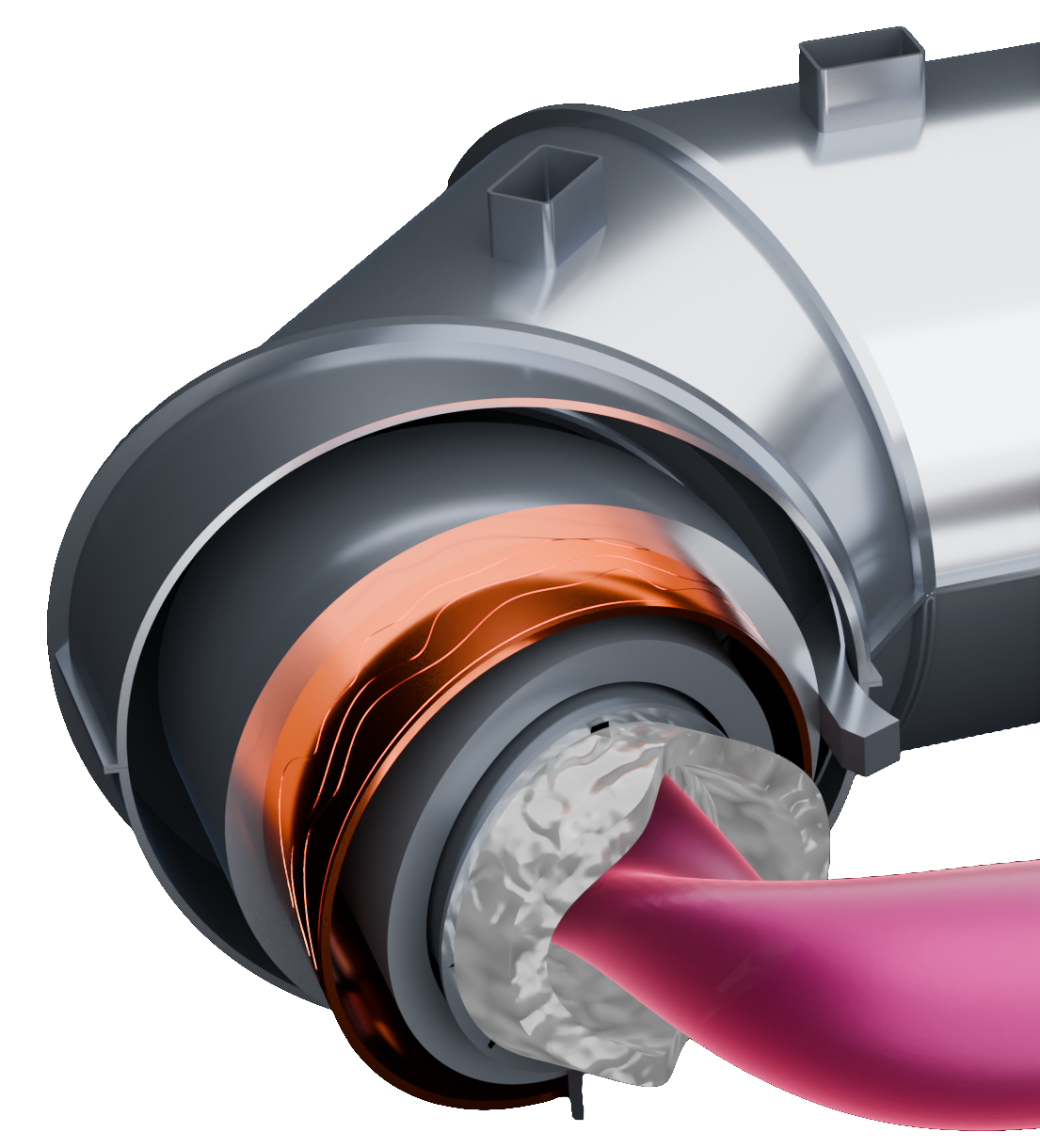
Our stellarator architecture is built around wide, laser-engraved HTS modules formed into cylindrical building blocks.
By replacing intricate 3D coils with manufacturable 2D modules, we simplify production while preserving magnetic precision. The modular structure allows magnets, plasma performance, and liquid metal systems to progress in parallel, and supports faster, AI-driven design iteration.
While most fusion programs optimize plasma physics within highly complex machines, Renaissance Fusion is uniquely designed for manufacturability, parallel development, and rapid iteration from day one.
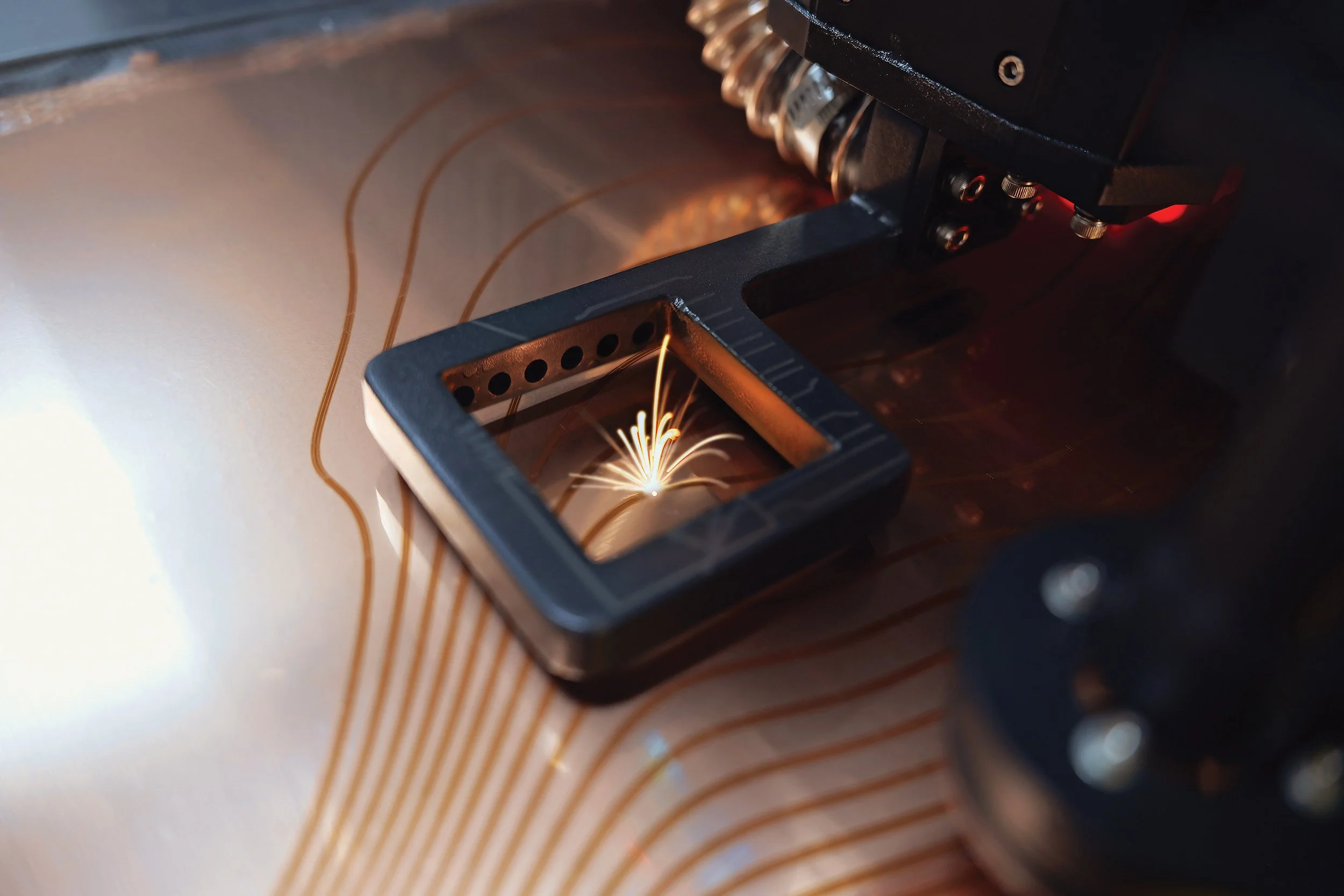
Crucially, several of the core engineering risks behind this architecture have already been retired. We have demonstrated hardware-scale engraving of copper and HTS, established in-house magnet construction capability, and successfully operated thick, flowing liquid metal at temperatures up to 700°C within an HTS magnet environment. These milestones address manufacturability, thermal integration, and plasma-facing stability, three of the historical constraints in stellarator development.
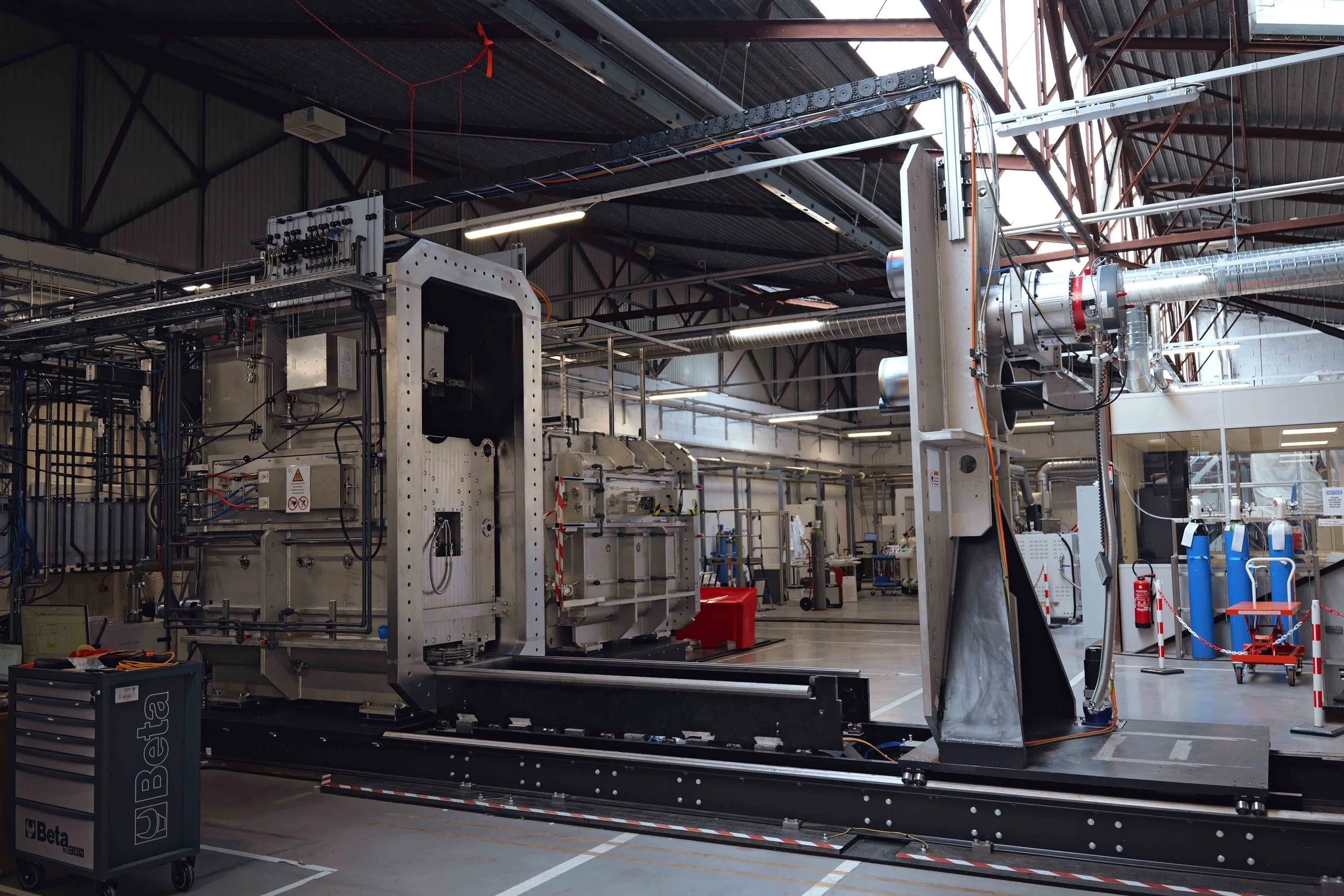
Fusion remains the long-term objective. But the enabling technologies, wide HTS pilot line, advanced magnet systems, and high-temperature liquid metal control, are directly aligned with the broader industrial shift toward high-density, reliable electricity infrastructure. We are advancing our work on HTS dynamics. Recently the commissioning of our first Physical Vapor Deposition (PVD) machine is live, enabling us to deposit two of buffer layers of the HTS architecture right here in our own facility.
This is a concrete step toward differentiated, wide-tape architectures. In an age defined by electricity, control over the enabling materials stack matters as much as the reactor design itself.
This is the environment in which Renaissance Fusion is building. Our stellarator is designed from the outset to be modular, scalable, and compatible with AI-driven development, allowing parallel progress across subsystems rather than monolithic iteration.
About our fusion machine -
Chartreuse series
Our organization has been adapting to support these recent advancements.
Over the past year, Renaissance Fusion has been evolving from a science-focused startup into a structured engineering organization, now increasingly orienting itself toward industrialization and commercialization. While our early efforts are centered on advancing plasma physics and validating key concepts, we are now increasingly focused on system integration and execution.
The team has expanded with senior hires in stellarator design, HTS magnet engineering, wider HTS sheets manufacturing, liquid metal systems, and program management, and we are establishing dedicated functions to lead construction and integration. This shift marks a deliberate step in de-risking our roadmap, moving from scientific exploration toward disciplined engineering delivery and early stages of our first experimental stellarator, and to speed up the path toward fusion commercialization.
Where to meet us this month
Fusion x Fest, April 14th, London, UK, Sam GUILAUME, Giorgio MARIANO, Domenico D’ANDREA
Looking for a career in fusion?
Discover more



Looking for an investment
or partnership opportunity?