Company
We are building the world’s best shot at abundant, clean energy in Grenoble, France.
Our values
Environmental, societal good
We focus on planetary problems and do our utmost to bring solutions and value to society and the environment.
-
Our final objective is the energy source that will directly or indirectly address 15 of the 17 Sustainable Development Goals of the United Nations. Our commitment to the planet is even in our logo: magenta like bougainvillaea flowers, deep blue like the sea and turquoise like the paws of the blue footed booby in the Galapagos.
Speed
We quickly jump from imagination to realization without fiddling with what might delay delivering fusion and its spinoffs.
-
Then we push hard and smart, animated by the urgency of our mission and reactivity to new information. Of the proverbial “on time, on specs, on budget”, time is our strongest drive, as several problems must be solved on time -climate change being a dramatic example. We decouple time from specs and budget by means of deep tech inventions.
They say fusion is like a marathon. We see it as several sprints, some in series, others parallelizable, run by a team.
Finally, speed is high and ever increasing: 1% acceleration every day means after a year you’ll be 1.01^218=8.75 times faster. And if in a year the team grows by 3x… well, we’ll let you do the maths.
Simplicity
We make things as simple as they can possibly be.
-
This is true for stellarators, HTS and many other things. What we do needs to work well here and now, not perfectly wherever and whenever. That’s why we start simple, build, test, and add layers of complexity only when needed, according to the inductive method. We isolate the problem, define a metric, brainstorm on options, converge on a decision.
Fantastic realism
We use the creative and the logical sides of the brain (in Renaissance spirit) to imagine a scientifically sound but nearly magic reality, at the frontier of what is physically possible. Then we build it.
-
Then we test it, learn, understand, face new problems and resourcefully imagine/build new solutions. We go into the lab and out of the lab and repeat the cycle until ideal and real converge. Our ingenuity is economically constrained; our risks are calculated (left side, right side). We make things never done before, which requires venturing outside our -or anybody’s- comfort and competence zone. Setbacks are an inevitable part of this journey and do not scare us from trying: a failure is just Nature telling us how to render our technologies and products fantastic.
Constructive interference
& unified force
We aim for pre-decision diversity and post-decision unity.
-
The collective creative process balances cross-fertilization and specialization. It’s like placing sources at specific locations, to maximize constructive interference at the observation point. Multidisciplinarity and internationalism make us constructively interfere and enjoy the work atmosphere. According to a Physics theory all interactions are different manifestations of the same force, and at high energy they are indistinguishable. We want to be a unified force.
A brief history
In July 2019 Renaissance Fusion was still an idea, presented at an event in New York and a conference in Milan. In August, Renaissance’s Francesco Volpe was joined by co-founder Martin Kupp.
The two brainstormed on possible European locations for the company and instantly fell in love with Grenoble, with its top international laboratories and beautiful natural scenery. In July 2020 the company was officially created, in March 2021 it received its first angel investments and shortly thereafter Diego Cammarano joined as the first employee.
The company received accolades in start-up competitions. By August 2021 it had outgrown its original seven-desk office and moved into a 900 m², two-story building. Collaborations began with institutes in France, Italy, Portugal and the USA.
Impact and growth
Since its creation, Renaissance filed 12 patent families on high-temperature superconductors and liquid metal technologies. That sparked a wave of seminars, webinars, and presentations at conferences, attracting global interest and over 60 M€ funds, including a 15.5 M€ seed round led by Lowercarbon Capital (May 2022); a 10 M€ grant from Bpifrance (November 2023); and 32 M€ in a series A1 round led by Crédit Mutuel (December 2024).
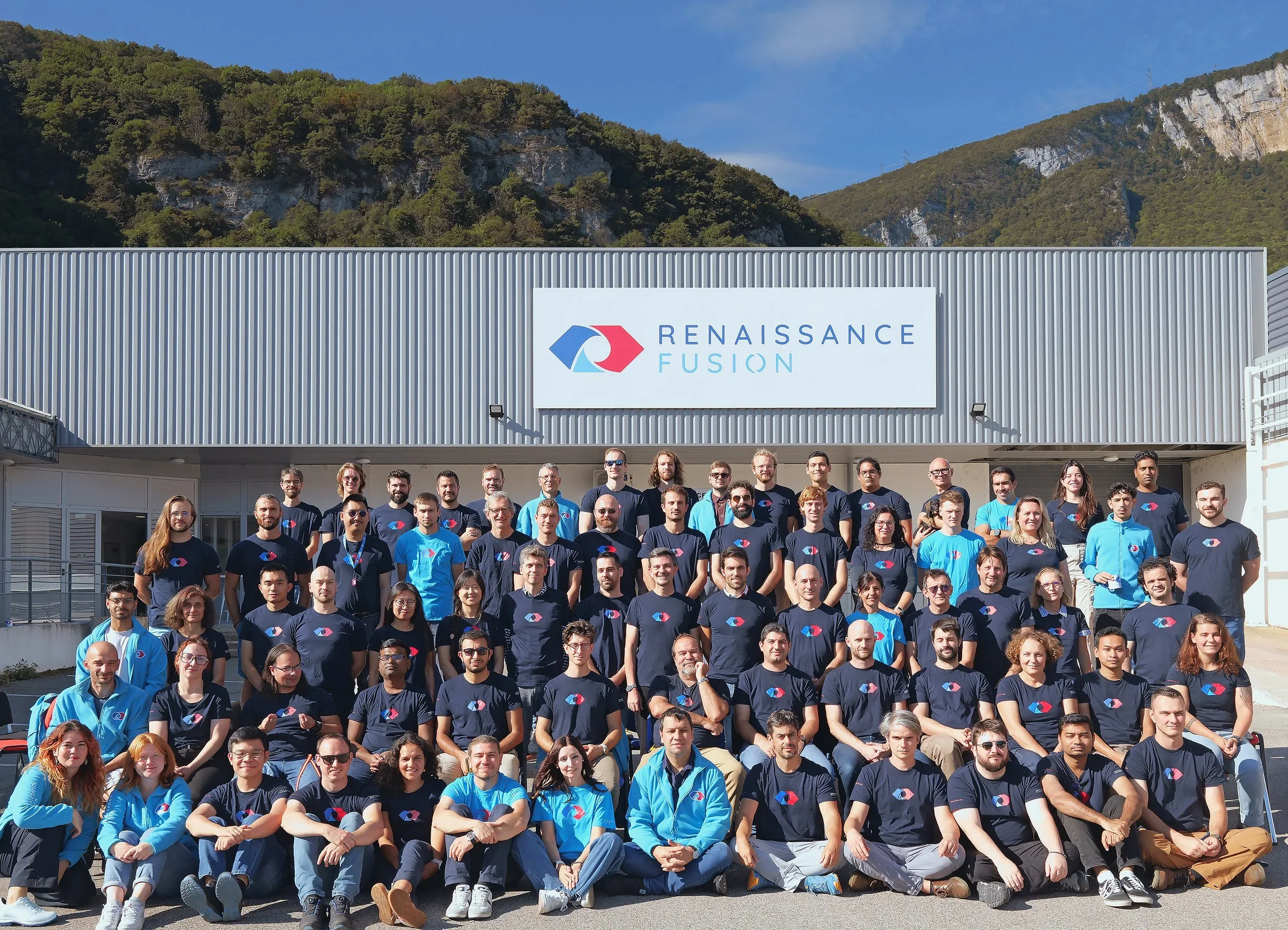
During this period, Renaissance has also grown exponentially and now employ over 100 people representing 24 nationalities. In October 2025, we opened our first office outside of France with the launch of our subsidiary Renaissance Fusion Italia, based in Pisa.
Our investors include



This project has been publicly funded as part of France 2030.
Milestones Company’s history
-
![]()
June 2020
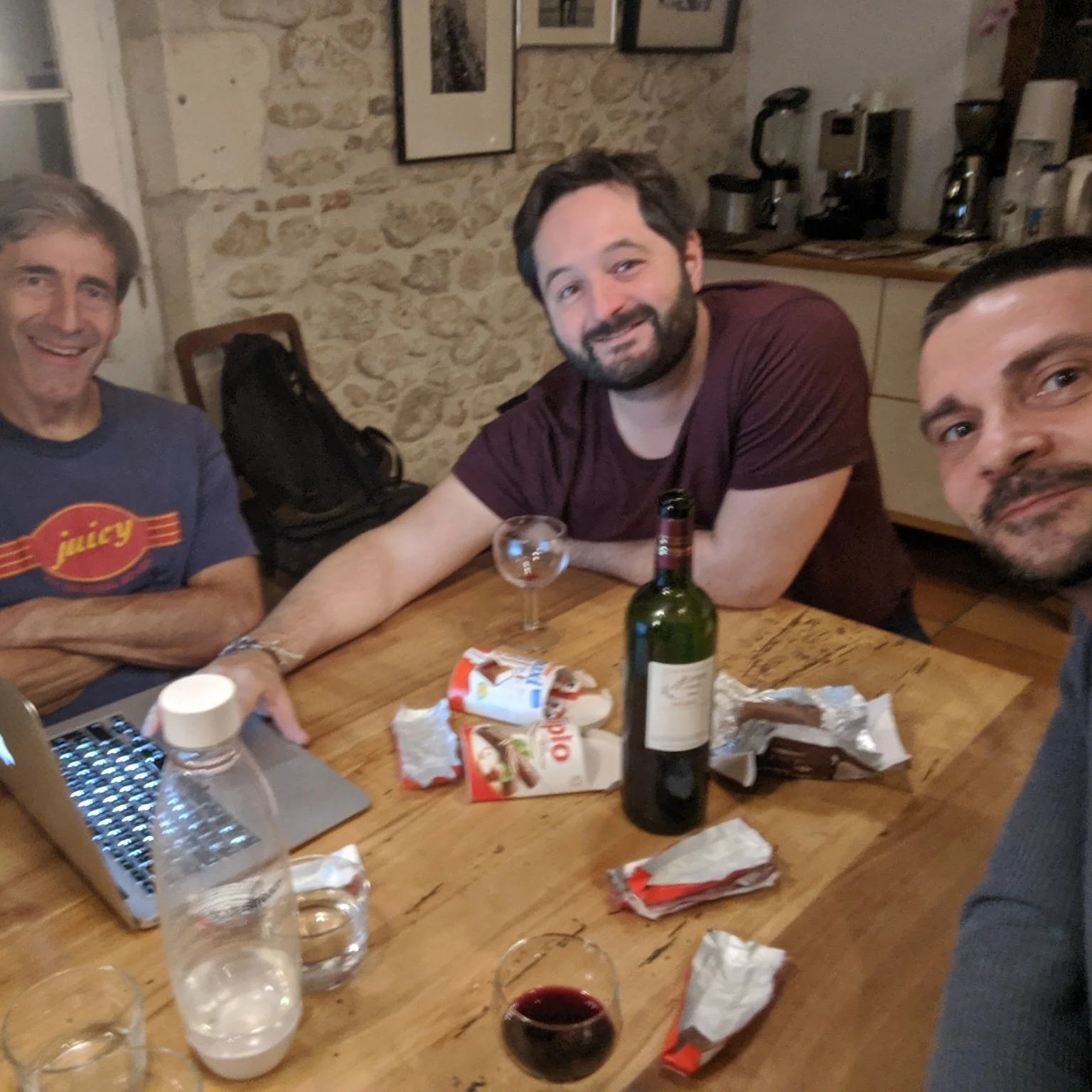
Birth of Renaissance Fusion: our founders Francesco Volpe (right) and Martin Kupp (left) officially launch their project to revolutionize the nuclear fusion sector with a next-gen, simplified stellarator based on the wide HTS tapes and liquid metal technologies.
-
![]()
February 2021
Love money round: raised our first funds with the support of family and friends.
-
![]()
March 2021
We receive the keys to our first office: a 35 m2 space at Regus Grenoble, a coworking space in the heart of one of Europe’s most dynamic tech hubs.
-
![]()
March 2021
The company starts recruiting its first employees; the team boasts five new members at the end of the year.
-
![]()
June 2021
Pre-seed round with business angels.
-
![]()
June 2021
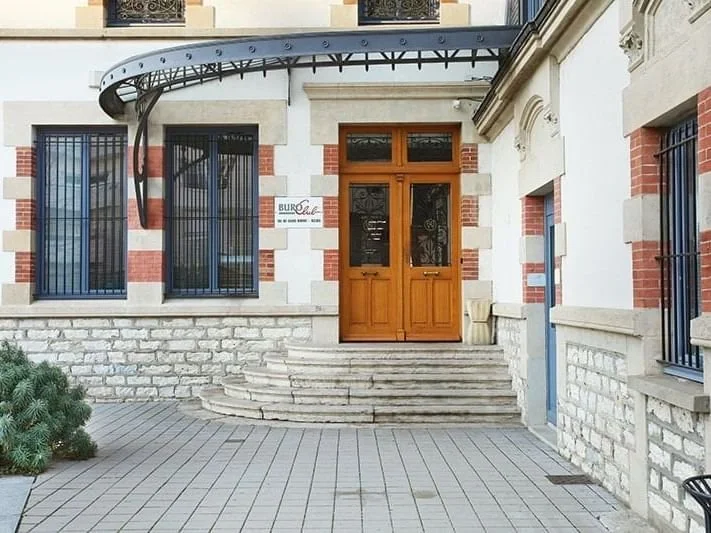
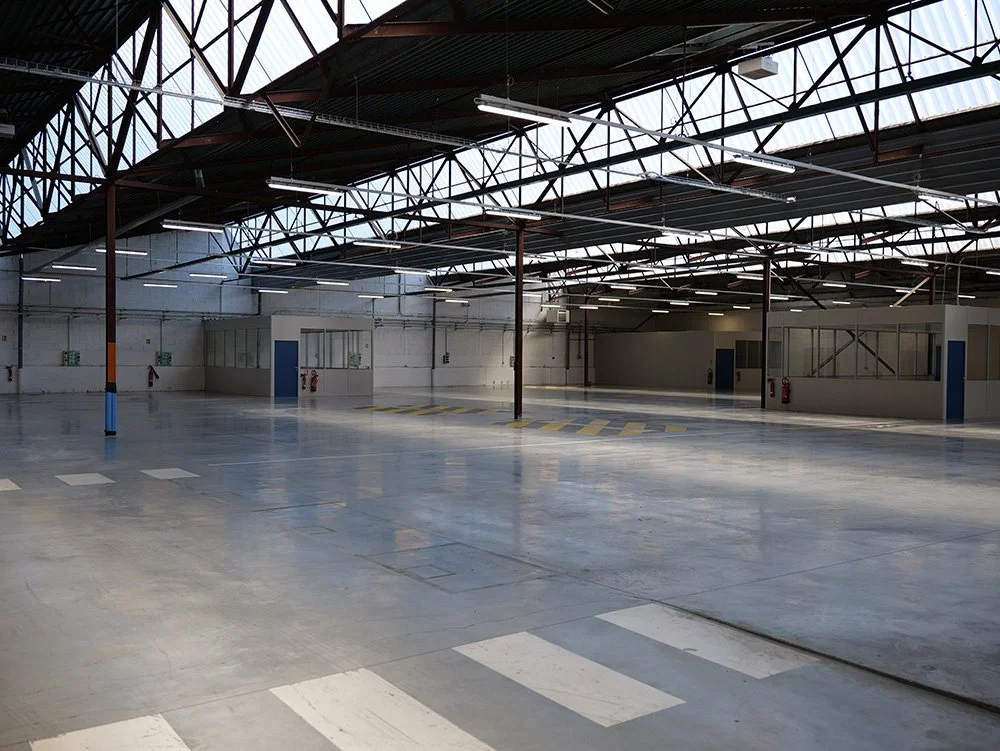
The development of our technologies calls for larger facilities: we sign a lease for an office and workshop complex at 22 rue Jean Pierre Timbaud in Fontaine, a few minutes out of Grenoble. We move in in August 2021.
-
![]()
May 2022
Seed round: raised €15.5 M thanks to Lowercarbon Capital, Positron Ventures, Norrsken, and other positive-impact investors.
-
![]()
November 2023
Received a €10 M grant by Bpifrance, following our nomination as awardees of French investment plan France 2030.
-
![]()
March 2024
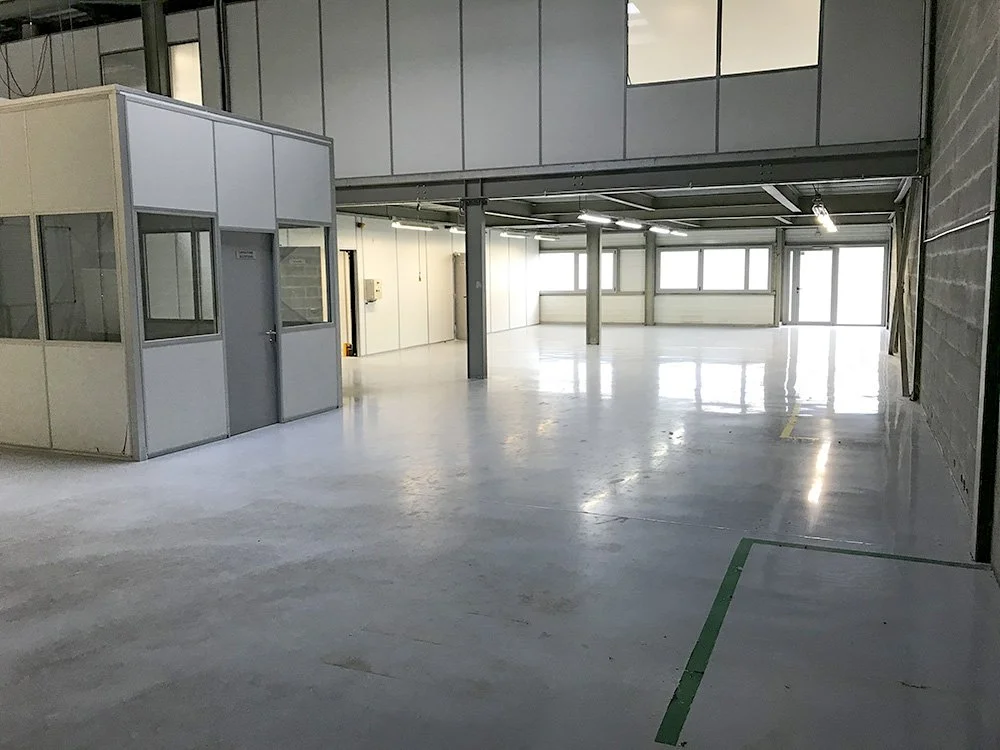
As our team continues to grow, our facilities start feeling cramped. we sign a lease for the neighboring building, at 14 rue Jean Pierre Timbaud. We settle in from April/May 2024.
-
![]()
December 2024
Series A1 round: raised €32 M with the support of Crédit Mutuel Impact and Lowercarbon Capital.
-
![]()
June 2025
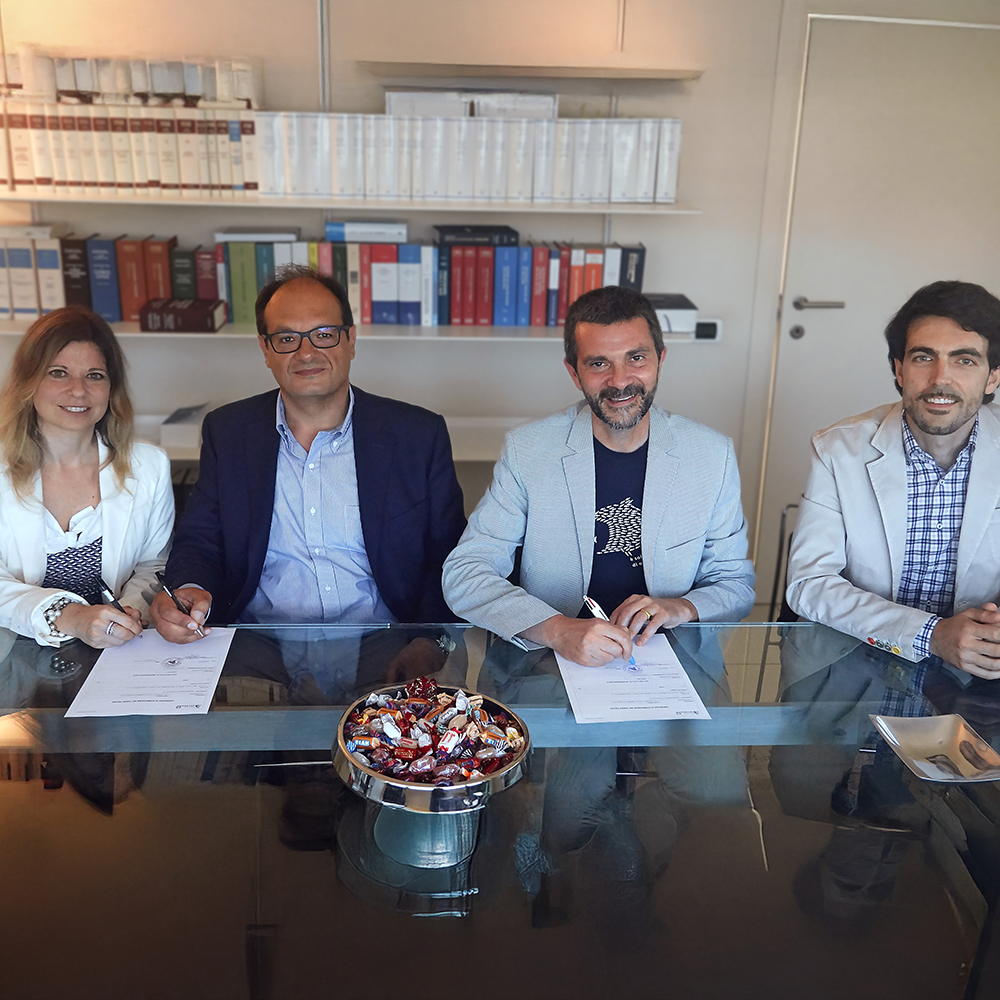
We inaugurate Renaissance Fusion Italia, located at Via Fratelli Rosselli 9 in San Giuliano Terme, near Pisa. Two months later, in August, we welcome our first Italy-based members.
-
![]()
November 2025
Our team reaches 100 employees, a symbolic milestone after five years of exponential growth.
-
![]()


Why Grenoble
We wanted to base the company in Europe to stay close to 40% of talent in fusion. Besides, France is quickly becoming a startup nation, is eager on nuclear innovations and has some of the best mathematicians in the world.
Grenoble has a unique ecosystem of national and international labs (ESRF, ILL, CEA Leti, CNRS), large companies (Air Liquide, STMicroelectronics), deep-tech start-ups (Aledia, Verkor) and energy actors (InnoEnergy, Schneider Electric, EDF). Cadarache (ITER, CEA) is a 3 hour drive and other technological hubs like Geneva, Lausanne, Turin, Saclay and Paris are also strategically close.
While not a fusion city, Grenoble is a center of excellence for fusion-enabling technologies: here René Moreau founded his famous liquid metal research group, a tradition continued today by SIMAP. STMicroelectronics, Soitec, Minatec and a multitude of growing start-ups drive Grenoble’s world-famous semiconductor sector. Some of their film-deposition techniques can be transferred to our superconductors.
Grenoble is a “magnetic city” since Néel’s Nobel Prize winning studies and home to some of the strongest magnets in the world (LNCMI-G). And lastly, Grenoble hosts two world-class neutron sources (ILL, LPSC), which are essential to fusion material testing.
Université Grenoble Alpes (UGA) ranks in the world top 50 in Physics, Metallurgical Engineering and Mathematics and attracts talented students, who often remain to further their careers. The beautiful surroundings and laid back, family-friendly, outdoor lifestyle do the rest. Grenoble lies in a Y-shaped valley in the middle of three massifs: Chartreuse, Vercors and Belledonne. Renaissance Fusion is located at the foot of the Vercors and is naming its stellarator Chartreuse (in line with the tradition of naming stellarators after mountains like Matterhorn and Wendelstein).
There’s something in the air in Grenoble.
It hosted stellarator research in the 1970’s, when stellarators were just ideas ahead of their time, before supercomputers, advanced manufacturing and HTS. In addition, Grenoble was one of the birthplaces of hydroelectricity in the 1870’s. We are committed to make it one of the birthplaces of fusion electricity in the early 2030’s.