
Stellarator Surface Measurements Conducted at TJ‑K in Collaboration with the University of Stuttgart
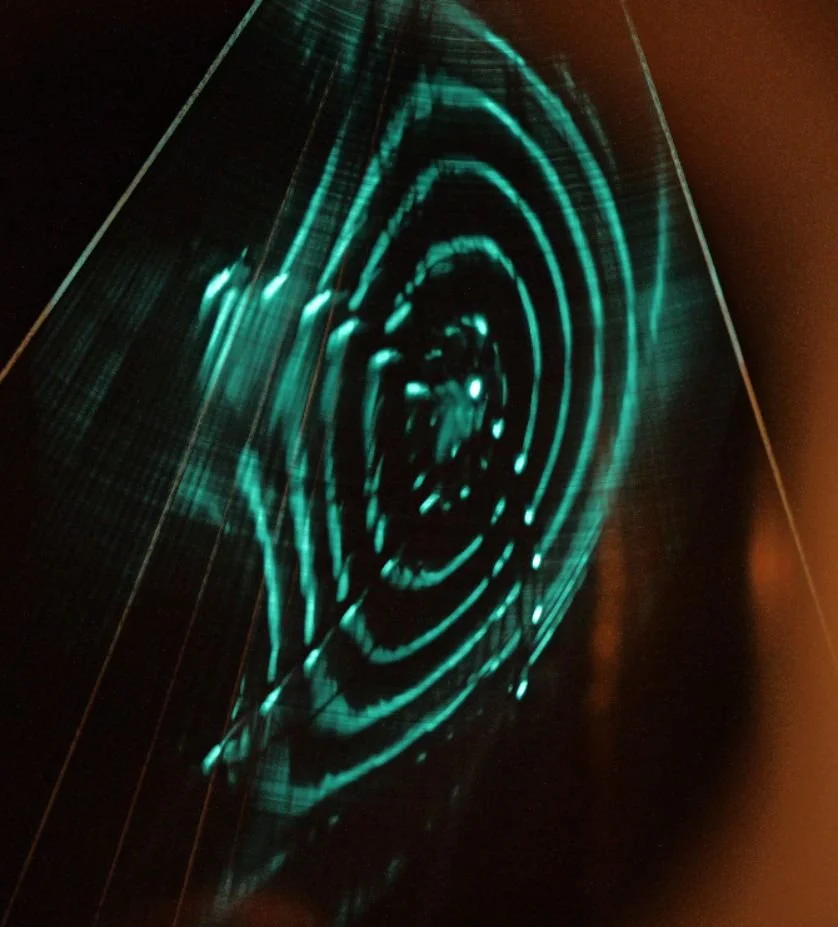
Renaissance Fusion has recently completed a series of stellarator surface measurements at the TJ‑K torsatron, carried out in collaboration with the Institute of Interfacial Process Engineering and Plasma Technology (IGVP) at the University of Stuttgart.
August 2, 2026 - The measurements represent an important milestone for the development of Renaissance Fusion’s first stellarator, Chartreuse D4. Stellarator plasmas form a set of nested, three‑dimensional magnetic surfaces whose geometry plays a critical role in plasma confinement and overall reactor performance.
Accurately computing and measuring these surfaces is therefore essential for advancing stellarator design.
The diagnostic used in Stuttgart was originally developed at Renaissance Fusion for Chartreuse D4.
Researchers James Butterworth and Iaroslav Morgal transported the instrument from Grenoble and, together with Alf Köhn‑Seemann, Mirko Ramisch, and Bernhard Roth at IGVP, installed it temporarily on TJ‑K.
The resulting measurements clearly reveal the magnetic surfaces of TJ‑K, providing strong confidence that the same instrument will successfully visualize the surfaces of Chartreuse D4 in the coming months.
This work marks the first time such a measurement has been performed by a 100% private stellarator company within a public‑private collaboration. It also paves the way for another ‘first’: Chartreuse D4 will be the first stellarator ever built by a private company.
The device will generate complex magnetic fields using electrical currents flowing on simple cylindrical surfaces. Constructed in copper and at reduced scale, Chartreuse D4 will serve as a key stepping stone toward larger stellarators based on wide high‑temperature superconductors.
Renaissance Fusion warmly thanks its colleagues at IGVP, University of Stuttgart, for their hospitality, collaboration, and commitment to advancing stellarator research.
Technical note: The diagnostic operates by directing an electron beam along a magnetic field line until it strikes a phosphor‑coated rod, producing a bright spot. As the rod is swept, successive spots form a long‑exposure image of a magnetic surface. By injecting the beam at different locations, multiple surfaces can be reconstructed.
(source: Francesco Volpe, Linkedin)
Want to know more? Reach out: media@renfusion.eu